Investigated reportLogged and followed up by an investigating group.On the recordIn a newspaper, police, government or court record, or from a named public witness.Told storyFolklore, oral tradition or a story passed along.Proven hoaxProven or confessed hoax.
Can you visit?LabelType
1Dark Watchers Told story
Humanoid · Santa Lucia Mountains and Big Sur coast, Monterey County · first reported colonial era (claimed); 1937 in print · also called Los Vigilantes Oscuros
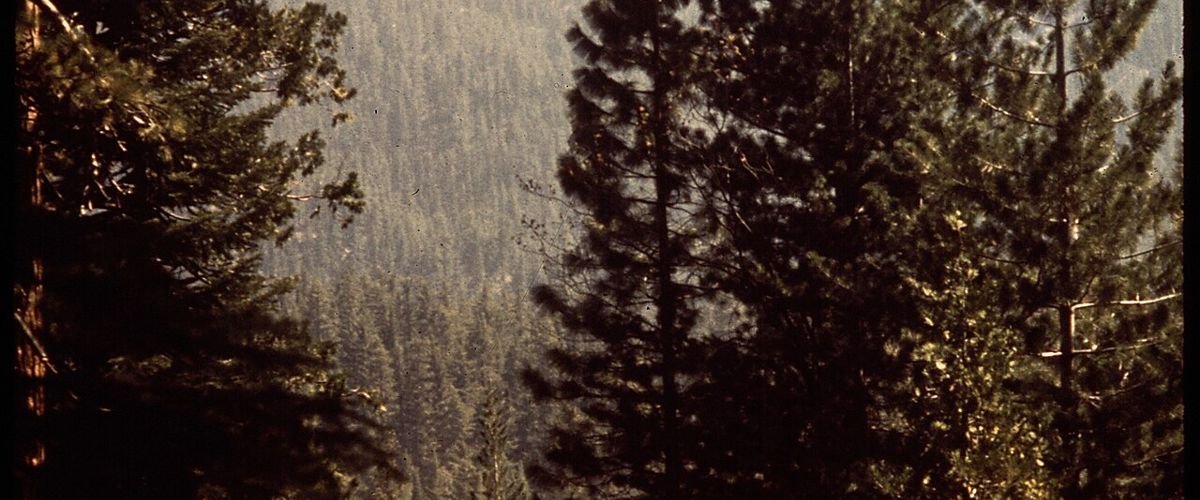
Hikers on the ridges above Big Sur sometimes speak of the Dark Watchers: very tall, faceless dark figures standing on distant ridgelines at dawn or dusk, sometimes with a brimmed hat or a walking stick. They are said to stand still and stare, then vanish if you approach. The legend is often said to go back to Spanish settlers and the Chumash, but there is no matching figure in recorded Chumash tradition. Literature gave it a boost: poet Robinson Jeffers wrote of human-looking forms on the coast range in 1937, and John Steinbeck put watchers in his 1938 story 'Flight.' Explanations include the Brocken spectre, where a hiker's own shadow is thrown onto mist, plus exhaustion and the eeriness of empty mountains.
1938Told story In Steinbeck's story 'Flight,' a mother warns her son never to show interest in the dark watchers on the ridges. Source: en.wikipedia.org
mid-1960sTold story A Monterey Peninsula high school principal said he saw a dark figure on a ridge while hiking with students. Source: en.wikipedia.org
2014Told story Thomas Steinbeck and artist Benjamin Brode published In Search of the Dark Watchers, collecting the lore with paintings. Source: folkbestiary.com
Open to visit
Visiting: Public trails in the Santa Lucia Mountains above Big Sur.
Other · Fresno; Yosemite Lakes Park near Coarsegold · first reported 2007 · also called Nightcrawlers
The Fresno Nightcrawlers are one of the strangest modern cryptids, and they exist almost entirely on video. In 2007 a home security camera in Fresno caught two small, pale shapes walking across a lawn at night. They look like a pair of long legs topped by a tiny body, with no arms visible, moving with a stiff, swaying gait. A second clip from Yosemite Lakes Park near Coarsegold surfaced in 2011. The TV series Fact or Faked: Paranormal Files examined the footage in 2010, and PBS's Monstrum covered the legend in 2025. Skeptics treat the clips as likely staged, though no one has come forward to claim them.
2007On the record A Fresno security camera recorded two pale, leg-dominated figures crossing a yard at night. Source: folkbestiary.com
2011On the record A second video from Yosemite Lakes Park showed similar figures, keeping the legend alive. Source: folkbestiary.com
Water monster · Lake Tahoe (California-Nevada line) · first reported 1865 (claimed); name 1975 · also called Tessie
Lake Tahoe is very deep and very cold, and some visitors say something big lives in it. An early tale credits I.C. Coggin with seeing a black-scaled serpent hundreds of feet long in 1865. Modern reports cluster in the 1980s, when police officers, nuns, an optician and Tahoe City postal workers described a dark shape at least ten feet long moving fast under the water. Reno officer Kris Beebe said one passed beneath him while he was waterskiing. The name itself is newer: Kings Beach resident Bob McCormick coined 'Tahoe Tessie' in 1975 and wrote a 1984 children's book that made her a mascot. Skeptics favor large sturgeon, released pet fish, or wind-driven waves.
1865Told story I.C. Coggin is said to have described a giant black-scaled serpent with a head fourteen feet wide; the story was printed decades later, in 1897. Source: folkbestiary.com
mid-1980sOn the record Reno police officer Kris Beebe said a dark creature at least ten feet long swam under him as he waterskied. Other officers, nuns and postal workers reported similar shapes. Source: kqed.org
1975On the record Bob McCormick coined the name on a kayaking trip; his 1984 book is said to have sold about 110,000 copies. Source: moonshineink.com
Open to visit
Visiting: Lakeshore towns such as Kings Beach and Tahoe City.
Water monster · Monterey Bay and the Santa Cruz waterfront · first reported 1940s · also called Bobo
Around Monterey Bay in the 1940s, fishermen talked about a sea creature they nicknamed Bobo, or the Old Man of Monterey Bay. About thirty fishing captains are said to have reported it. Descriptions mention a big head, a long tail, pointed spines along the back, and, most strangely, a face like a very old man or a monkey with large eyes. It is one of several West Coast sea-serpent traditions, and like the others it rests on brief glimpses at the surface with no photo or body.
1940sTold story Some thirty fishing captains reportedly described a dragon-like animal with a big-eyed, old-man or monkey-like face in the bay. Source: kqed.org
Open to visit
Visiting: Santa Cruz Municipal Wharf and Monterey's Fisherman's Wharf.
Humanoid · Shelf Road, Ojai Valley; later Old Creek Road and Camp Comfort, Ventura County · first reported 1961-62 · also called Charman
Ojai teenagers have scared each other with the Char Man since at least the early 1960s. In the classic story he is a man horribly burned in a wildfire, often tied to the 1948 Wheeler Springs fire, who lurks along back roads and leaps out at cars. The earliest reports reached Ojai police sergeant Bill Klamser in 1961-62. Folklorist Charlie Seemann studied the legend and connected it to a real reclusive older resident with severe burn scars on his face and arms who walked Shelf Road at night. As roads were developed, the Char Man moved to Old Creek Road and the bridge at Camp Comfort. Students were still telling the story in 2021.
1961-1962On the record Ojai police sergeant Bill Klamser received reports of a burned man scaring drivers on back roads. Source: folkbestiary.com
2021Told story USC's folklore archive recorded current student versions of the Char Man story. Source: folkbestiary.com
Winged · Partrick Road, hills west of Napa · first reported unknown · also called Rebobs
Driving Partrick Road at night to look for the Rebobs is a Napa teenage rite of passage. The Rebobs are usually described as winged, monkey-like creatures; some versions add robot or mechanical parts. Origin stories range from a mad scientist's experiment or escaped hybrids to a secret government project. Another idea credits Halloween pranks by a local family. The legend is beloved locally: there was a 2018 push to make the Rebob a Napa High School mascot, and a local theater staged The Revenge of the Rebobs in 2025.
Humanoid · Eastern Sierra: Tioga Lake, Convict Lake, Mono Lake · first reported 2012
Penelope is a modern legend of the Eastern Sierra, told as a tall pale woman, nearly seven feet, with long light hair, long limbs and a damaged face. The best-known account comes from 2012, when a father and teenage son camping in their RV near Tioga Lake said they encountered her, a story first posted to a splitboarding forum. Later retellings give her a dark backstory: she survived a car crash that killed her husband, sheltered in a toxic waste drum, and became violent. Writers note the story spreads mostly online. It has been featured in PBS SoCal's 2022 survey of California monster folklore.
2012Told story A father and son camping near Tioga Lake reported a tall, pale female figure with a deformed face; the account circulated online. Source: folkbestiary.com
Winged · Lone Pine and the Eastern Sierra, Inyo County · first reported 2010 online · also called Mountain Devil
The Lone Pine Mountain Devil is described as a bat-winged, meat-eating predator, sometimes like a pterosaur, haunting the Eastern Sierra. Websites claim it attacked gold-rush travelers in the 1800s. Research points to a much newer origin: a 2010 comedy horror video called Mountain Devil Prank Fails Horribly, after which backdated 'history' was added online. A 2013 letter in the local paper, the Sierra Wave, questioned whether there was ever a local tradition. It shows how an internet joke can become a cryptid. USC's folklore archive recorded a person's telling in 2017.
2010Proven hoax A comedy video by Chad, Matt and Rob introduces the Mountain Devil; supposed 19th-century accounts appear online later. Source: folkbestiary.com
Beast · Proctor Valley Road between Chula Vista and Jamul, San Diego County · first reported 1960s
Proctor Valley Road winds through dry hills between Chula Vista and Jamul, and since the 1960s it has had its own monster. Stories say isolated ranches lost livestock to strange attacks. The creature is described as about seven feet tall, covered in matted hair, with a twisted cow-like head, clawed hands and footprints eighteen inches long, and with a deep bellow that carries through the brush. Explanations in the lore range from a curse to a mutated feral animal. It remains a classic late-night drive legend for San Diego teenagers. Sources for it are thin and mostly from the cryptid community.
Winged · Tower Bridge, Sacramento · first reported 2009
In 2009 photographer Lamont Greer reported a tall winged figure near Sacramento's golden Tower Bridge over the Sacramento River. He described a humanoid about seven feet tall with red eyes and wings spanning ten to fifteen feet, able to fly. The report draws obvious comparisons to West Virginia's Mothman and is one of a handful of Mothman-style sightings reported outside Point Pleasant. Few details beyond the single account have surfaced.
2009Told story Lamont Greer said a red-eyed winged humanoid about seven feet tall was near the Tower Bridge. Source: kqed.org
Open to visit
Visiting: Tower Bridge and Old Sacramento waterfront.
Water monster · Trinity Alps, Trinity County · first reported 19th century
Stories from the rugged Trinity Alps of northern California describe giant salamanders in remote lakes and streams, far bigger than any known western species. Reports go back to the 19th century but have been rare since the early 20th century. No specimen has ever been produced, and scientists treat it as unproven. It remains one of the more plausible-sounding but least-documented cryptids in the state.
Open to visit
Visiting: Trinity Alps Wilderness, Shasta-Trinity National Forest.
Ape-like · Bluff Creek, Six Rivers National Forest; Willow Creek · first reported 1869 (Antioch report); 1958 (name) · also called Bluff Creek, Antioch Bigfoot
California is where 'Bigfoot' got its name, after road worker Jerry Crew's 1958 footprint casts at Bluff Creek, and where the 1967 Patterson-Gimlin film was shot. An 1869 report from an Antioch hunter is an early California account. See the main Bigfoot dossier.
1869Told story An unnamed hunter near Antioch described watching a five-foot, broad-shouldered, long-armed hairy creature for about twenty minutes, and a second one he took to be female. Source: kqed.org
Tours, museum or events
Visiting: Willow Creek: China Flat Museum Bigfoot collection and the yearly Bigfoot Daze.