Overview
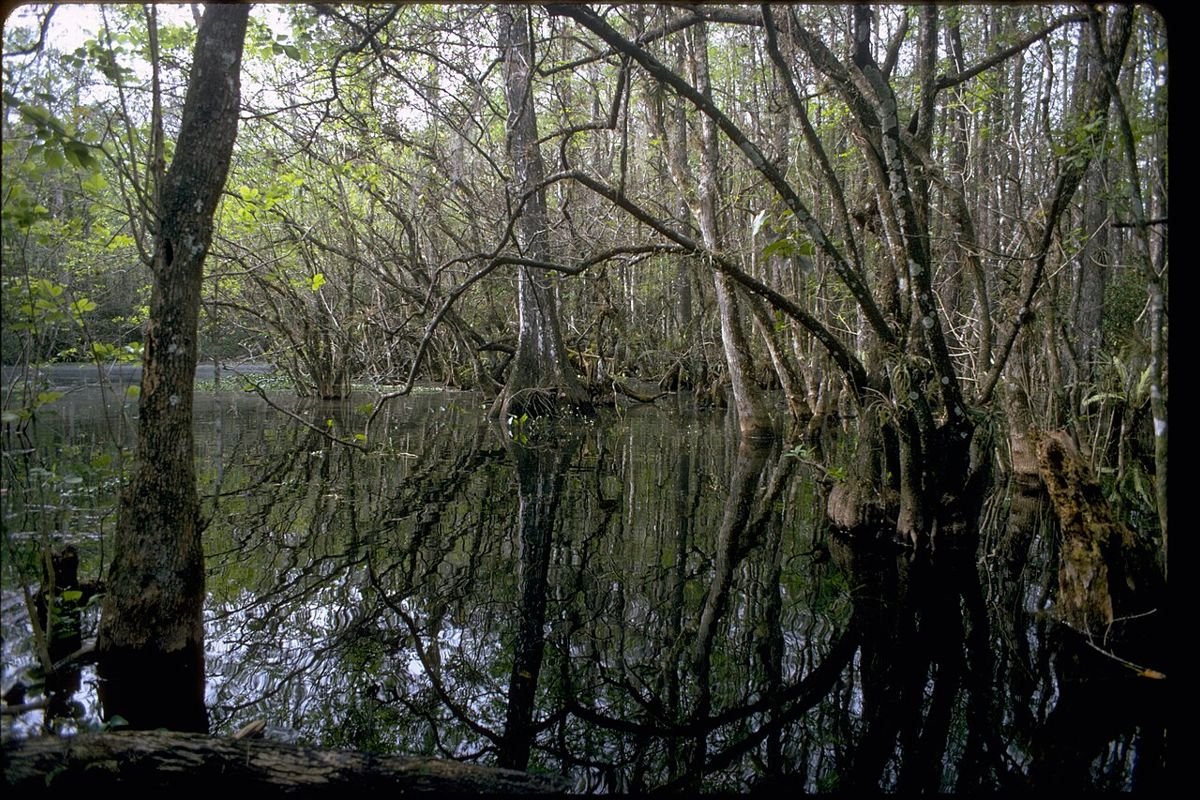
Big Cypress National Preserve covers about 720,000 acres of cypress swamp, pine islands and wet prairie in South Florida, west of Miami and next to Everglades National Park. Created in 1974, it is crossed by the Tamiami Trail, U.S. 41. The Miccosukee and Seminole peoples hold permanent rights to use the land. The tiny community of Ochopee sits along the Trail in the middle of it.
This is the heart of skunk ape country. Florida's version of Bigfoot is described as a five-to-seven-foot ape-like creature with dark red to black hair and a strong, foul smell. Reports come from across the state, but the Big Cypress area, with its long road through roadless swamp, has become the creature's best-known address.
Reports surged in Broward County between 1971 and 1975, including a law officer who said he hit the creature with his car. In 1977 a bill to protect 'anthropoids or humanoid animals' was proposed in the Florida legislature but failed. In 1997, Ochopee Fire Control District Chief Vince Doerr photographed a dark upright figure in the swamp, and about fifty more sightings followed within two weeks.
Ochopee local Dave Shealy has spent decades pursuing the creature and runs the Skunk Ape Research Headquarters, with exhibits, a gift shop and a campground, on the Tamiami Trail. The National Park Service considers the skunk ape a hoax, but the roadside stop has become a classic Florida detour.
Visiting
Where: Big Cypress National Preserve along U.S. 41 (Tamiami Trail), about 45 miles west of Miami. Skunk Ape Research Headquarters is at 40904 Tamiami Trail East, Ochopee, at Trail Lakes Campground.
Access: The preserve is public national park land; ranger-led swamp walks and canoe trips run in season. The Research Headquarters is a private roadside attraction with exhibits, a reptile display, a gift shop and camping. Wildlife is the real danger: alligators, cottonmouths and diamondback rattlesnakes live here, and Florida panthers roam the area. Stay on marked trails, carry water and avoid wading at night. Respect Miccosukee and Seminole lands along the Trail.
Events: No festival found; the Research Headquarters is the main year-round attraction.
Timeline
- 1971-1975A wave of sightings in Broward County, including an officer who says he struck the creature with his car.
- 1974Big Cypress National Preserve is established.
- 1977A Florida bill to protect 'anthropoids or humanoid animals' fails.
- July 1997Dave Shealy reports raided lima-bean bait stations and odd tracks.
- 1997Fire chief Vince Doerr photographs a dark upright figure; about 50 sightings follow in two weeks.
- 2000The Sarasota County Sheriff's Office receives anonymous 'Myakka' photos of an ape-like animal.
Reported sightings
Broward County, FL
1971-1975 On the record
A run of reports described a five-to-seven-foot ape-like creature with dark red to black fur. Claims included break-ins, killed livestock and a law enforcement officer who said he struck the creature with his car. The reports helped spark the failed 1977 protection bill.
Source: en.wikipedia.orgNear Ochopee, Big Cypress
July 1997 On the record
Dave Shealy reported that wildlife bait stations stocked with lima beans had been raided and that strange tracks surrounded them. Shealy says he has seen the creature three times himself.
Source: en.wikipedia.orgBig Cypress swamp near Ochopee
1997 On the record
Ochopee Fire Control District Chief Vince Doerr photographed a dark, upright figure in the swamp that he said was a skunk ape. Within two weeks, about fifty more sightings were reported in Big Cypress National Preserve.
Source: en.wikipedia.orgNear I-75, Sarasota County (the 'Myakka photos')
2000 On the record
The Sarasota County Sheriff's Office received two anonymous photos of a large, hairy, ape-like animal. The sender, describing herself as an elderly woman, said it had been taking apples from her porch near I-75 and worried it was an escaped orangutan. The sender was never identified.
Source: en.wikipedia.orgEvidence
Doerr photograph (1997) Disputed
A dark upright figure in the swamp, photographed by a fire chief.
Myakka photos (2000) Disputed
Two anonymous photos sent to a sheriff's office; sender unknown.
Bait-station tracks (1997) Disputed
Reported by Dave Shealy around raided lima-bean stations.
What each side says
What witnesses and researchers report
Supporters note that reports come from officials such as a fire chief and a law officer, and that the swamp is vast, wet and mostly roadless, a hard place to prove anything absent.
Dave Shealy argues that a small population lives in the Everglades, and points to tracks and his own sightings as reasons to keep looking.
What skeptics and scientists suggest
Joe Nickell suggests many sightings are Florida black bears, some perhaps with mange, along with misidentifications and hoaxes. The National Park Service regards the skunk ape as a hoax.
Skeptics also note that the best-known photos are anonymous or impossible to verify, and that no body, bones or confirmed hair sample has been produced.
Open questions
- Who sent the 2000 Myakka photos?
- What raided Shealy's bait stations in 1997?
Did you know?
- Dave Shealy says lima beans are the skunk ape's favorite bait.
- Cryptozoologists cite a Seminole and Miccosukee name, Esti Capcaki, meaning roughly 'hairy giant'.