Overview
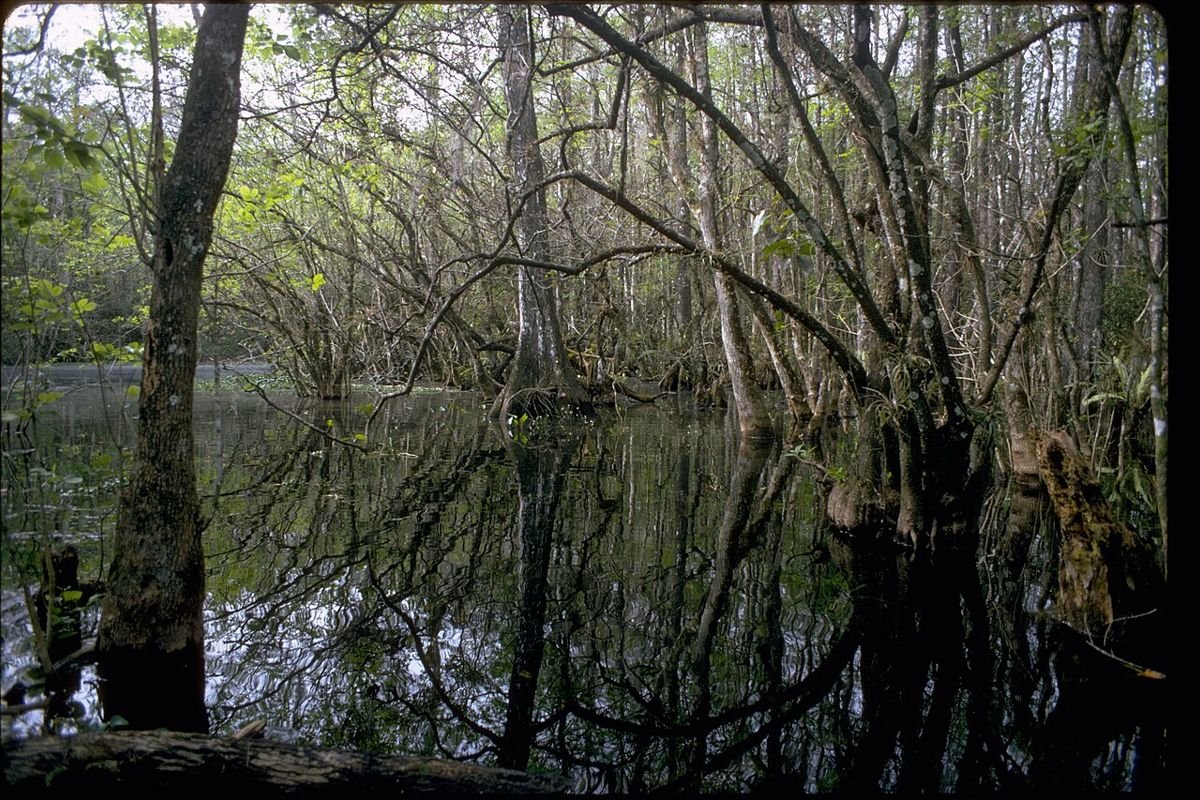
The skunk ape is Florida's version of Bigfoot, said to live in the swamps and forests of the state, especially the Everglades and Big Cypress. Witnesses describe an upright, ape-like creature five to seven feet tall, with mottled reddish-brown to black hair. Its name comes from the powerful, rotten smell reported in many encounters.
Reports surged in the 1970s, particularly in Broward County, where people described night-time encounters, livestock deaths and even a police officer who said he hit one with his car. In 1977 a bill was proposed in the Florida legislature to protect 'anthropoids or humanoid animals'. It did not pass.
In 2000 the Sarasota County Sheriff's Office received two anonymous photos showing a large, hairy creature, with a letter suggesting it might be an escaped orangutan. These 'Myakka photos' are still debated. The same year, Everglades guide Dave Shealy released video he says shows a skunk ape. Skeptics, including the National Park Service, say there has never been a verified sighting. They point to black bears, escaped primates and hoaxes. Shealy's Skunk Ape Research Headquarters in Ochopee keeps the legend very much alive.
Timeline
- 1957Hunters say an ape invaded their camp.
- 1971-1975Wave of reports in Broward County.
- 1974Dave Shealy says he first saw a skunk ape.
- 1977A bill to protect 'humanoid animals' fails in the Florida legislature.
- 1997Tour bus passengers report a sighting.
- 1998Shealy photographs a creature from a tree stand.
- 2000Shealy's video; anonymous Myakka photos sent to Sarasota sheriff.
Reported sightings
South Florida
1957 Told story
One of the earliest publicized reports came from hunters who said an ape invaded their camp. Details are sparse, but the story is often given as the start of the modern skunk ape record.
Source: smithsonianmag.comBroward County, Florida
1971-1975 On the record
Multiple witnesses reported nighttime encounters with an ape-like creature five to seven feet tall with dark red to black fur. Reports included alleged break-ins and livestock deaths. A law enforcement officer said he struck the creature with his car. This wave put the skunk ape on the map.
Source: en.wikipedia.orgBig Cypress area, near Ochopee, Florida
1974 On the record
Dave Shealy says that at age ten, while deer hunting with his brother Jack, he saw a skunk ape about 100 yards away. The experience set the course of his life; he went on to make the creature his specialty.
Source: smithsonianmag.comNear Ochopee, Florida
1997 On the record
About 30 to 40 tour bus passengers reportedly saw a creature at the same time. In separate reports that year, Jan Brock and Vince Doerr said they photographed the creature, and Shealy said his lima bean bait stations were raided and unusual tracks left behind.
Source: smithsonianmag.comBig Cypress area, Florida
1998 On the record
Shealy says he photographed a skunk ape from a tree stand and made a concrete cast of a footprint. He offers them as some of his best evidence.
Source: smithsonianmag.comBig Cypress area, Florida
2000 On the record
Shealy released video, about a minute and 48 seconds long, that he says shows a skunk ape running through the swamp. Supporters consider it important evidence; skeptics remain unconvinced.
Source: smithsonianmag.comNear Myakka River State Park, Sarasota County, Florida
2000 On the record
The Sarasota County Sheriff's Office received two anonymous photos of a large, hairy, ape-like figure with a letter. The writer said it had been stealing apples and feared it might be an escaped orangutan. Cryptozoologist Loren Coleman and others thought an orangutan was likely; Shealy disagreed. The photographer was never identified.
Source: en.wikipedia.orgEvidence
Myakka photos (2000) Disputed
Two anonymous photos of an ape-like figure; widely thought to show an orangutan or a costume.
Shealy video (2000) Disputed
About 1:48 of footage of a running figure.
Footprint casts Disputed
Shealy reports four-toed prints and a concrete cast.
What each side says
What witnesses and researchers report
Witnesses, including a police officer and a busload of tourists, describe a large, smelly, upright ape. Dave Shealy, whose family has lived in the Big Cypress since 1891, says he has seen it more than once.
Supporters argue that the Everglades and Big Cypress are vast and hard to search, and that the smell described in so many reports is a consistent detail.
What skeptics and scientists suggest
The National Park Service says no sighting has ever been verified by its wildlife staff, and skeptic Sharon Hill notes the evidence is almost entirely eyewitness testimony.
Joe Nickell suggests Florida black bears, some with mange. South Florida also has escaped and released primates and wild monkey colonies, and Smithsonian magazine noted primate facilities near the area.
Open questions
- Who took the Myakka photos?
- Could escaped primates explain some Big Cypress sightings?
Visiting
Where: Skunk Ape Research Headquarters, Ochopee, Florida, in the Big Cypress area; Myakka River State Park near Sarasota.
Access: Shealy's headquarters is a private business with a gift shop, campground and tours.
Did you know?
- Shealy calls himself the 'Jane Goodall of skunk apes'.
- A 1977 Florida bill would have made it illegal to harm 'anthropoids or humanoid animals'.
- Florida has self-sustaining wild monkey populations, such as at Silver Springs.