Overview
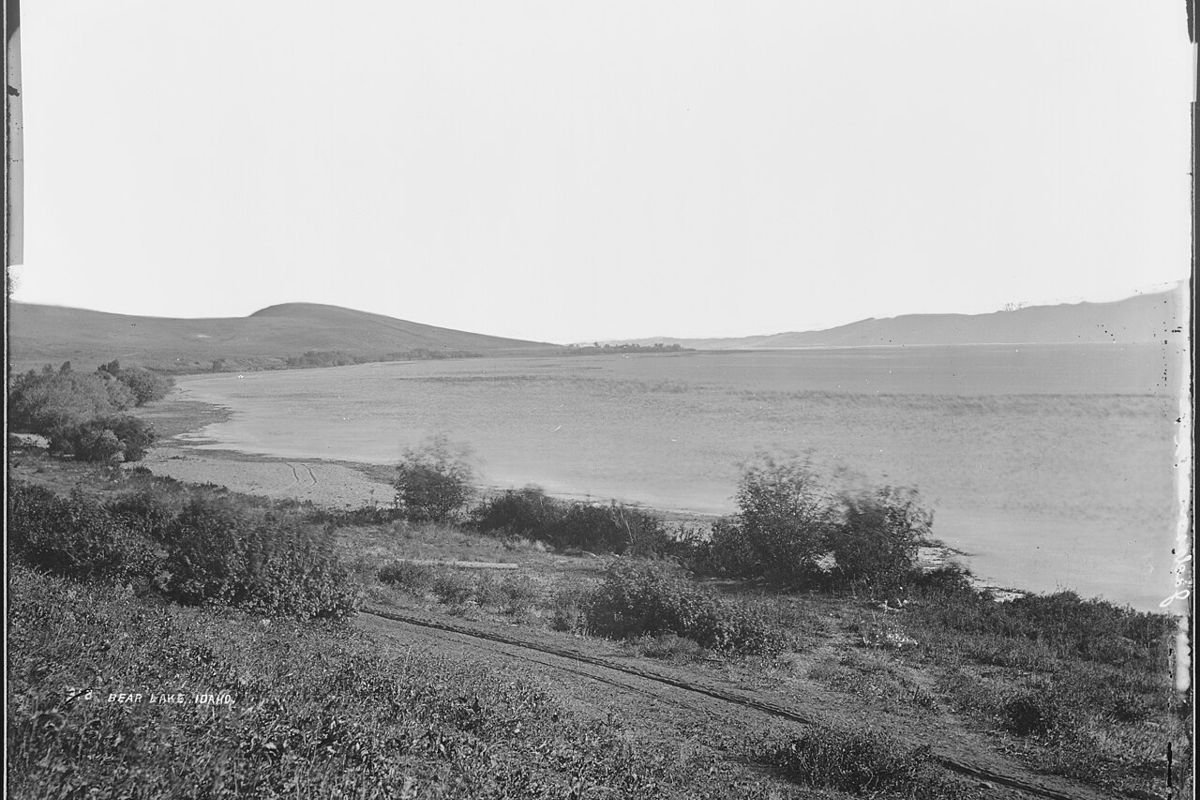
Bear Lake straddles the border of northern Utah and southern Idaho at nearly 6,000 feet. It covers about 109 square miles and is up to 208 feet deep. Suspended limestone particles give the water a striking turquoise color. Garden City, Utah, on the west shore, is the main tourist town, and each state has a state park on the lake.
The Bear Lake Monster began in print. In 1868, Joseph C. Rich wrote articles for the Deseret News describing sightings of a large serpent-like creature. One said local Native people had a tradition of a strange serpent-like creature in the lake.
Years later, Rich admitted he had made it up, calling his tale a 'wonderful first-class lie'. But the monster had taken on a life of its own. In 1874 a church bishop, William Budge, described a creature with a fox-like face, big blue eyes and horse-like ears. Reports kept coming through the 20th century, with the last documented one in 2002.
Today the monster is a friendly local mascot. In 1996, during Garden City's Raspberry Days festival, it was officially named 'Isabella' after a child's contest entry. A green, monster-shaped tour boat once carried visitors on scenic cruises full of folklore.
Visiting
Where: Bear Lake on the Utah-Idaho border. Garden City, Utah, on the west shore, is the main town; there are state parks on both the Utah and Idaho sides.
Access: Public beaches, marinas and campgrounds are open at the state parks. The water is cold and the lake is big enough for sudden wind and waves, so check conditions before paddling.
Events: Raspberry Days in Garden City, usually the first week of August, where the monster was named Isabella in 1996.
Timeline
- 1868Joseph C. Rich publishes the first monster articles in the Deseret News.
- 1874Bishop William Budge describes a sighting.
- Late 1800sRich admits the stories were a 'wonderful first-class lie'.
- 1907A letter claims the monster attacked a camp and killed a horse.
- 1937A four-year-old reports seeing the creature.
- 1946A Boy Scout leader reports a sighting.
- 1996The monster is named 'Isabella' at Raspberry Days.
- 2002Business owner Brian Hirschi makes the last documented report.
Reported sightings
Bear Lake
1868 Proven hoax
Joseph C. Rich's Deseret News articles described sightings of a serpent-like creature and claimed local Native people had a tradition of such a beast in the lake. Rich later confessed the accounts were made up, calling them a 'wonderful first-class lie'.
Source: en.wikipedia.orgBear Lake
1874 On the record
Bishop William Budge described a creature about five or six feet long with a flat, very wide face like a fox, large blue eyes and ears like a horse's. His account, from a church leader, helped keep the legend alive after Rich's articles.
Source: en.wikipedia.orgBear Lake shore
1907 Told story
A letter claimed the monster came ashore, attacked a camp and killed a horse. No independent record of the attack was found.
Source: en.wikipedia.orgBear Lake
1937 On the record
A four-year-old child reported seeing the monster in the lake. The report shows the legend was still alive among local families seventy years after Rich's articles.
Source: en.wikipedia.orgBear Lake
1946 On the record
A Boy Scout leader reported a sighting of the creature. Details of the size and location were not given in the sources reviewed.
Source: en.wikipedia.orgBear Lake
2002 On the record
Brian Hirschi, a Bear Lake business owner, reported the most recent documented sighting. By then the monster was already a local mascot with an official name.
Source: en.wikipedia.orgEvidence
Rich's 1868 articles Proven hoax
The founding reports, later admitted to be fabricated.
Later eyewitness accounts Unexplained
Scattered reports from 1874 to 2002, with widely varying descriptions.
What each side says
What witnesses and researchers report
People who still take the sightings seriously point out that witnesses kept reporting something after Rich's confession, including a bishop in 1874 and a business owner in 2002, people with little reason to embarrass themselves.
They also note that Rich's articles claimed a Native tradition of a lake serpent existed before settlers arrived.
What skeptics and scientists suggest
Skeptics point out that the legend's own founder admitted it was a lie. Once the idea was planted, waves, logs, swimming animals and large fish would easily be read as the monster.
The descriptions vary wildly, from a fox-faced animal a few feet long to a 50-foot serpent with heads likened to a cow, otter, crocodile or walrus, which skeptics see as a sign that people were seeing many different things.
Open questions
- Did a Native tradition of a lake serpent exist before Rich wrote about it, or did he invent that too?
- What did Bishop Budge see in 1874?
Did you know?
- Bear Lake's turquoise color comes from fine limestone particles suspended in the water.
- The lake has fish found nowhere else, including the Bear Lake cisco.