Overview
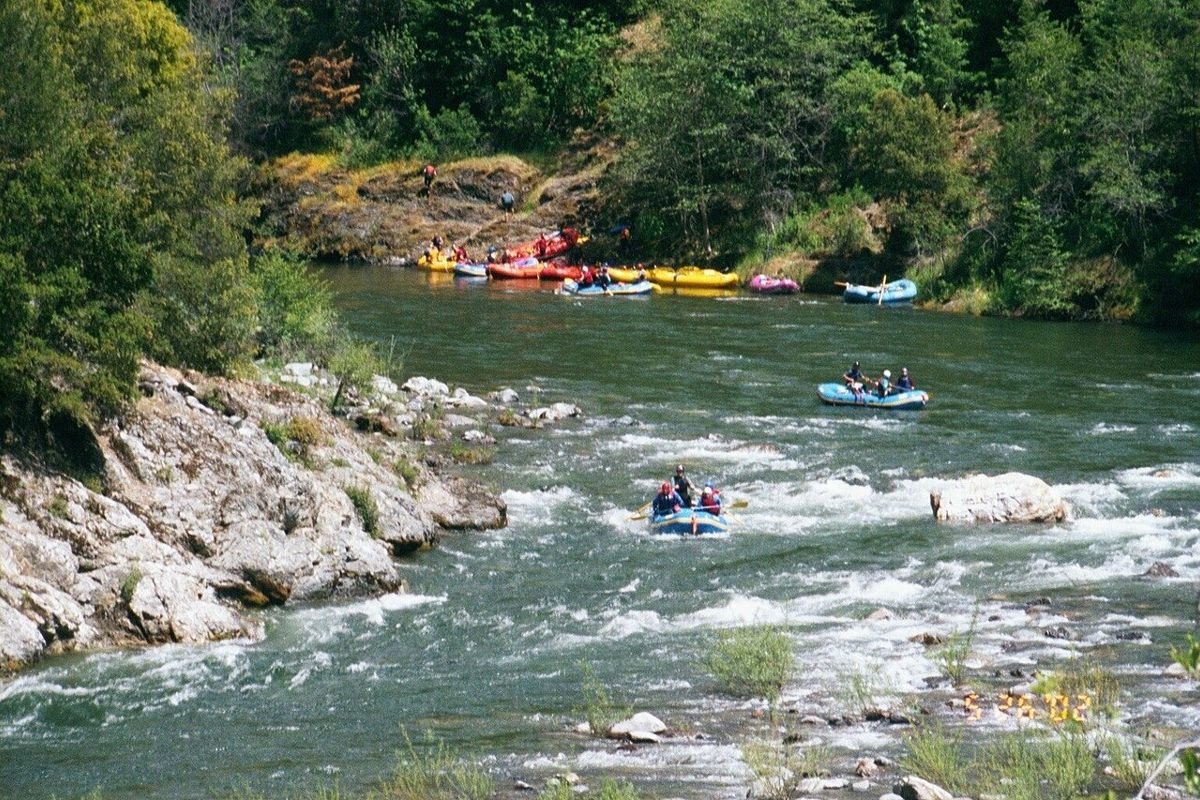
Bluff Creek runs through steep, logged-over mountains in the Six Rivers National Forest of far northern California, joining the Klamath River on the line between Humboldt and Del Norte counties. The film site lies about 25 logging-road miles northwest of the small town of Orleans. It is rugged, lightly travelled country, and in the late 1950s it was full of road crews cutting new logging roads.
In 1958 bulldozer operator Jerry Crew found huge, human-shaped footprints in the mud at a road job in the area. He cast one in plaster, and on October 6, 1958, the Humboldt Times ran his photo on its front page. Reporter Andrew Genzoli's stories used the crews' nickname for the track-maker, 'Bigfoot', and the name went national.
On October 20, 1967, Bigfoot enthusiast Roger Patterson and his partner Bob Gimlin were in the Bluff Creek area filming a Bigfoot docudrama. They came back with 59.5 seconds of 16mm film showing a large, dark, hairy figure walking across a gravel bar and turning to look at the camera. They also made plaster casts of its tracks.
Bluff Creek is therefore a pilgrimage site twice over. But it is also a place of famous doubt: in 2002 the family of Crew's co-worker Ray Wallace said he had faked tracks with carved wooden feet, and a costume maker and a former acquaintance of Patterson later claimed the film showed a man in a suit. The film site itself was relocated by researchers in 2011.
Visiting
Where: Bluff Creek drainage, Six Rivers National Forest, reached by Forest Service roads off Highway 96 near Orleans and Weitchpec. The nearest Bigfoot-themed town is Willow Creek, about 50 miles south.
Access: This is public national forest land, but it is remote, steep and has no visitor facilities, no marked film site and little or no phone signal. Forest roads are gravel, may be washed out or gated, and are used by log trucks. Go only with a high-clearance vehicle, full tank, maps, water and someone who knows your plan. Respect nearby tribal lands of the Yurok and Hoopa Valley tribes, which are not public.
Events: None at the site. See Willow Creek for the museum and Bigfoot Daze festival.
Timeline
- 1958Jerry Crew finds and casts large footprints at a logging road job in the Six Rivers National Forest.
- Oct 6, 1958The Humboldt Times prints Crew's cast on its front page; the name 'Bigfoot' spreads.
- Oct 20, 1967Roger Patterson and Bob Gimlin film a figure walking along Bluff Creek and cast its prints.
- 1972Roger Patterson dies of cancer.
- 2002Ray Wallace's family reveals carved wooden feet and says he made the 1958 tracks; Philip Morris claims he sold Patterson an ape suit.
- 2011Researchers relocate the exact film site on Bluff Creek.
Reported sightings
Logging road job, Six Rivers National Forest near Bluff Creek
1958 Proven hoax
Bulldozer operator Jerry Crew found a line of large, human-like footprints, about 16 inches long, pressed deep into mud at a road job, and made a plaster cast. The Humboldt Times put it on the front page and used the name 'Bigfoot'. In 2002, the family of Crew's late co-worker Ray Wallace showed carved wooden feet and said Wallace made the tracks. Crew himself is not accused of faking them.
Source: en.wikipedia.orgGravel bar on Bluff Creek, about 25 road miles NW of Orleans
Oct 20, 1967 On the record
Roger Patterson and Bob Gimlin filmed a dark, hair-covered, upright figure walking away across the creek bed. In the best-known frame, number 352, it turns its head and shoulders toward the camera. Patterson first put its height at about 6 ft 6 in to 7 ft, later 7 ft 6 in; Gimlin said about 6 ft. They made two plaster casts of the best right and left prints. The film has never been proven either genuine or fake to everyone's satisfaction.
Source: en.wikipedia.orgFish Lake, near Bluff Creek, Humboldt County
June 6, 1996 Investigated report
A camper at Fish Lake reported finding a 13.5-inch footprint and an odd three-toed print, which he cast and videotaped. That night he reported footsteps, breaking branches and ground vibrations from something unseen less than 30 feet from camp. The BFRO rated it Class B.
Source: bfro.netBluff Creek, 4-5 miles above the Klamath River
July-Sept 1996 Investigated report
Three people searching for sign near the old Wright Place found a cedar twisted off about eight feet up, more than 15 trees broken between four and eight feet high, and a large scat full of seeds and huckleberries that they thought did not look like bear scat. BFRO investigator Richard Hucklebridge reviewed their photos and rated it Class B.
Source: bfro.netAbout 3/4 mile below Louse Camp, Bluff Creek
June 21, 2003 Investigated report
A hiker found a single print in an old mud puddle, 16 inches long and almost 6 inches wide at the heel, near several snapped-off trees. A BFRO investigator visited and, after reviewing the hiker's video, concluded the track looked like that of a large biped.
Source: bfro.netOnion Lake, Onion Mountain, northeast of Weitchpec
July 5, 2004 Investigated report
Two brothers camping at Onion Lake said they heard loud grunts and forceful exhalations from several directions through the night, as if animals were calling to each other. Deer stayed close to their camp. BFRO investigator Darrell Trimm called it a classic vocalization report; no tracks were found.
Source: bfro.netEvidence
Patterson-Gimlin film (1967) Disputed
The most studied Bigfoot evidence. Supporters such as anthropologists Grover Krantz and Jeff Meldrum argued the gait and body do not fit a person in a suit. Primatologist John Napier concluded the evidence pointed to a hoax. Bob Heironimus says he wore the suit; Philip Morris says he sold one to Patterson.
1958 Crew footprints Proven hoax
Ray Wallace's family said in 2002 that he made the tracks with carved wooden feet.
1967 plaster casts Disputed
Two casts of right and left prints made by Patterson and Gimlin at the site.
What each side says
What witnesses and researchers report
Researchers who defend the film, among them anthropologists Grover Krantz and Jeff Meldrum, point to the figure's movement, gait and proportions, which they argue would have been hard to fake with 1967 costume technology. Bob Gimlin, born in 1931, outlived his partner by decades.
BFRO investigators note that reports of tracks, broken trees and night calls kept coming from the Bluff Creek drainage long after 1967, from campers who often knew little about the film.
What skeptics and scientists suggest
Skeptics note that Patterson set out specifically to film Bigfoot for a documentary, that a man has claimed to be the figure in the suit, and that a costume dealer claimed to have sold Patterson an ape suit. Napier judged the evidence as a whole pointed to a hoax.
The 1958 tracks that gave Bigfoot its name were claimed by Ray Wallace's family as his work, which skeptics see as a warning that the area's footprint evidence was seeded by pranksters from the start.
Open questions
- Has any independent analysis settled whether the 1967 figure is a person in a costume?
- How many of the 1958 tracks did Ray Wallace actually make?
Did you know?
- Bob Gimlin was born in 1931 and long outlived his partner, who died in 1972.
- Frame 352, where the figure glances back, is one of the most reproduced images in cryptozoology.