Overview
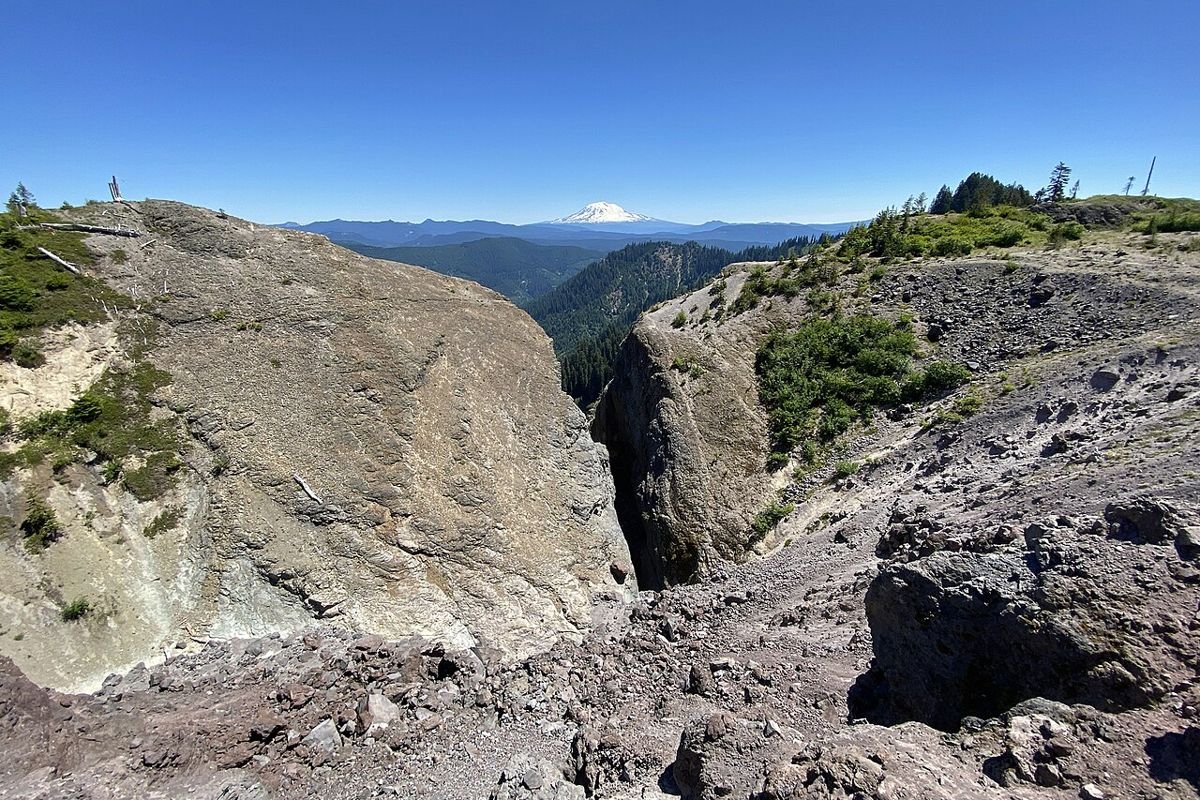
Ape Canyon is a narrow gorge on the southeast shoulder of Mount St. Helens in southwest Washington, along the edge of the high, barren Plains of Abraham. At its tightest point it pinches to about eight feet wide. It lies inside what is now Mount St. Helens National Volcanic Monument in Skamania County.
The name comes from a 1924 story. A group of gold prospectors said ape-like animals about seven feet tall attacked them. One of the miners, Fred Beck, said he shot one of the creatures with a rifle. The men said the creatures came back that night and pelted their cabin with large stones, and that they left giant footprints. On July 16, 1924, The Oregonian ran the story, and it made national news.
Forest Service rangers went to the scene. They climbed into the canyon that had been called inaccessible, found nothing, showed that the 14-inch footprints could easily be faked, and concluded the miners had placed the stones themselves. The story kept spreading anyway, and decades later it became a founding tale of modern Bigfoot lore.
The 1980 eruption of Mount St. Helens reshaped the area. Today the Ape Canyon Trail is popular with hikers and mountain bikers, and nearby Ape Cave, a long lava tube on the mountain's south side, adds to the 'ape' place names. Skamania County even passed a 1969 ordinance making it illegal to kill a Sasquatch.
Visiting
Where: Mount St. Helens National Volcanic Monument, Skamania County, WA. Ape Canyon is on the southeast side, reached by the Ape Canyon Trail; Ape Cave is on the south side off Forest Road 83.
Access: The Ape Canyon Trail is on public national forest land and is popular with hikers and mountain bikers; it climbs to exposed, high country with no shade or water, so carry plenty and check weather and road status before going. Ape Cave is a 2.5-mile lava tube that stays about 42 F all year: bring two light sources and warm clothes. Forest roads near the volcano can close seasonally.
Events: No festival at the canyon. Skamania County's 1969 Sasquatch protection ordinance is still on the books.
Timeline
- Summer 1924Prospectors report an attack by ape-like creatures near their cabin on Mount St. Helens.
- July 16, 1924The Oregonian publishes the story and it spreads nationally.
- 1924Forest Service rangers J.H. Huffman and William Welch investigate and conclude the miners staged the evidence.
- April 1, 1969Skamania County passes an ordinance banning the killing of Sasquatch.
- 1980The eruption of Mount St. Helens heavily affects Ape Canyon.
- 1984The Skamania County ordinance is amended; it has never been repealed.
Reported sightings
Ape Canyon, southeast side of Mount St. Helens
Summer 1924 On the record
Gold prospectors said they met ape-like animals about seven feet tall. Miner Fred Beck said he shot one with a rifle, and the men said one toppled into the gorge. That night, they said, the creatures returned and bombarded their cabin with large stones, leaving 14-inch footprints. The Oregonian printed the story on July 16, 1924. Rangers later concluded the miners had faked the evidence.
Source: en.wikipedia.orgAbout 3 miles east of Spirit Lake, Forest Road 26
Fall 1967 Investigated report
A witness told the BFRO that his grandfather, an experienced outdoorsman, met a creature he believed was a Sasquatch near Spirit Lake. The grandfather rarely spoke of it but said he had looked something in the eye that few men had ever seen. BFRO rated it Class A, though the account is second-hand.
Source: bfro.netOff Forest Road 25, about 10 miles north of Eagle's Cliff, southeast of the volcano
Aug 27, 1998 Investigated report
A hiking family found three large droppings about five inches across, made of finely ground plant matter, and a human-like footprint about 16 inches long beside one. Samples were frozen and shown to wildlife faculty, who could not identify the source. BFRO rated it Class B.
Source: bfro.netWindy Ridge Road near the Clearwater Creek and Miner's Car area, blast zone
Oct 20, 1999 Investigated report
Witnesses said a large, black, upright animal seemed to draw them away while a smaller one moved off. One watched through a spotting scope and called the hair charcoal black. A cast was made of a large print with visible toes found in mud near a broken tree. A BFRO investigator examined the cast in 2002 and rated the report Class A.
Source: bfro.netCampsite off Forest Road 25 near Cougar, Lewis River area
Aug 24, 2020 Investigated report
A camper reported a very loud branch snap about 50-75 feet from his tent around 10 p.m., then distant howls that answered his own calls and seemed to move closer over an hour. In the morning he found one wide print, about size 13, in dried mud less than 20 feet from the tent. BFRO investigator Kevin Llewellyn spoke with him and rated it Class B.
Source: bfro.netEvidence
1924 cabin attack Disputed
Rangers found no sign of creatures, showed the footprints could be faked and concluded the miners placed the stones.
1998 scat samples Unexplained
Collected and shown to university wildlife faculty, who could not identify the source.
1999 footprint cast Disputed
Cast from Windy Ridge examined by a BFRO investigator.
What each side says
What witnesses and researchers report
For Bigfoot researchers, Ape Canyon is a founding case: a group of working men told the story to the press in 1924, decades before Bigfoot was a household word, and one of them said he had shot one of the creatures.
Investigators also point to the steady stream of reports around the volcano since then, from tracks and scat to night howls, many of them logged by the BFRO with follow-up interviews.
What skeptics and scientists suggest
The Forest Service rangers who investigated in 1924 concluded the miners staged the evidence, and showed how easily the 14-inch prints could be faked. They also found the supposedly inaccessible canyon could be entered.
Skeptics suggest the rocks may have had a human source, such as pranksters, and that the story survived because people wanted to believe it, not because new evidence emerged.
Open questions
- Who or what threw the rocks at the cabin in 1924?
- Did the 1980 eruption change where Sasquatch reports come from around the mountain?
Did you know?
- Ape Cave is named for the Mount St. Helens Apes, a local Boy Scout troop that explored it, not directly for the 1924 creatures.
- Skamania County passed its Sasquatch law on April Fool's Day 1969, but it was a real ordinance.