Overview
The chupacabra, Spanish for 'goat-sucker', is blamed for killing livestock and draining their blood through small puncture wounds. It first made headlines in Puerto Rico in 1995. Within a few years, reports had spread across Latin America and into the southwestern United States.
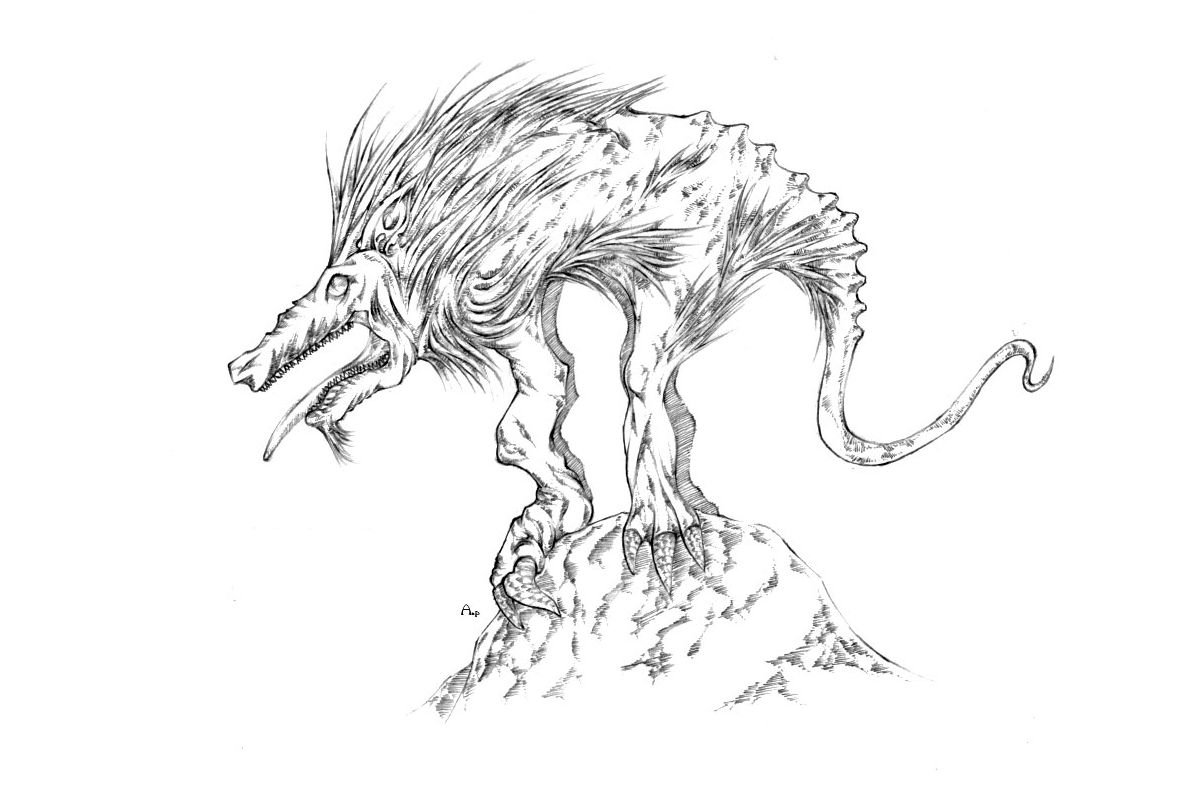
The first famous description came from Canóvanas resident Madelyne Tolentino in August 1995. She described a creature about four to five feet tall that stood on two legs, with large dark eyes, thin limbs and spines down its back. Comedian and radio host Silverio Pérez is credited with giving it the name chupacabras that same year.
As the legend moved to Texas and Mexico, the creature changed. Instead of a spiny biped, people began finding four-legged, nearly hairless, dog-like animals with gray, wrinkled skin. Several were shot or found dead, and DNA tests identified them as coyotes or coyote mixes suffering from severe mange. Writer and investigator Benjamin Radford spent five years on the case and argues that Tolentino's description closely matches the alien in the 1995 film Species, which she had seen. Believers point out that the Puerto Rican livestock deaths were real, and some ranchers remain convinced something unusual killed their animals.
Timeline
- 1975Livestock deaths in Moca, Puerto Rico, are blamed on 'el Vampiro de Moca'.
- March 1995Eight sheep are found dead with puncture wounds in Puerto Rico.
- 1995Silverio Pérez coins the name chupacabras on his radio show.
- July 1995The film Species is released.
- August 1995Madelyne Tolentino reports her sighting in Canóvanas.
- Late 1990sReports spread to Mexico, Central and South America, and the US Southwest.
- 2004The 'Elmendorf Beast' in Texas tests as a coyote with mange.
- 2007Phylis Canion's Cuero, Texas, specimen tests as a coyote with Mexican wolf ancestry.
Reported sightings
Moca, Puerto Rico
1975 On the record
Farm animals in and around Moca were found dead with wounds that people said looked like they had been drained of blood. The unknown killer was nicknamed 'el Vampiro de Moca'. Police suspected wild dogs. The killings stopped by summer without a clear answer, and the episode is now seen as a forerunner of the chupacabra.
Source: wildmeaning.comPuerto Rico
March 1995 On the record
Eight sheep were found dead with puncture wounds, and reports said the bodies had been drained of blood. This case is usually treated as the start of the modern chupacabra panic. Similar livestock deaths were soon reported across the island, and the media attention grew quickly.
Source: en.wikipedia.orgCanóvanas, Puerto Rico
August 1995 On the record
Madelyne Tolentino said she saw a creature about four to five feet tall, standing on two legs, with large dark eyes, thin limbs and spines along its back. Her report came during a wave of about 150 animal deaths in the area. It became the defining image of the chupacabra. Investigator Benjamin Radford later found that she had seen the film Species shortly before and that her description closely matched the movie's creature.
Source: wildmeaning.comMexico, Central and South America, US Southwest
Mid to late 1990s Told story
Within a few years of the Puerto Rico reports, people across the Americas were blaming the chupacabra for dead goats, chickens and other animals. Reports came from Argentina, Bolivia, Brazil, Chile, Colombia, Mexico and the southwestern United States. Descriptions varied widely from place to place.
Source: en.wikipedia.orgElmendorf, Texas
2004 On the record
A nearly hairless, dog-like animal found near Elmendorf drew national attention as the 'Elmendorf Beast'. DNA testing at the University of California, Davis, identified it as a coyote with sarcoptic mange, a mite infection that strips away fur and leaves thick, gray skin.
Source: wildmeaning.comCuero, Texas
July 2007 On the record
Rancher Phylis Canion found strange, hairless, dog-like carcasses near her property in Cuero. Testing of three bodies found coyote DNA, with one animal showing Mexican wolf ancestry. Radford examined the 'Cuero chupacabra' for the TV program MonsterQuest.
Source: wildmeaning.comEvidence
Tolentino description (1995) Disputed
The source of the spiny, two-legged image. Radford found it closely matched the alien 'Sil' in the film Species, which she had watched.
Puerto Rico livestock deaths Disputed
Real animal deaths with puncture wounds. Investigators point to dogs and other predators; believers say the wounds were unusual.
Elmendorf Beast (2004) Explained
DNA: coyote with sarcoptic mange.
Cuero specimens (2007) Explained
DNA: coyote, one with Mexican wolf ancestry, with mange.
What each side says
What witnesses and researchers report
Farmers in Puerto Rico lost real animals, and many said the wounds and the lack of blood did not look like a dog attack. Witnesses like Tolentino described their experience in detail and stood by it.
Supporters also note that the creature was reported in many countries in a short time, by people who often had no contact with each other.
What skeptics and scientists suggest
Every chupacabra body sent to a lab has turned out to be a dog or coyote, usually with severe mange. Mange makes a familiar animal look alien: hairless, wrinkled and thin.
Benjamin Radford argues that the original description came from the film Species, and that ordinary predators killed the livestock. Animals bitten by dogs often bleed internally, which can make it look as if blood was drained.
Open questions
- What killed the Moca animals in 1975?
- Why did the creature's description change from a biped to a four-legged canid?
Visiting
Where: Canóvanas and Moca in Puerto Rico; South Texas ranch country around Cuero.
Access: These are towns and private ranchland, not attractions; there is no official site.
Did you know?
- The chupacabra may be the first major cryptid born in the age of cable news and the internet.
- Sarcoptic mange can make a coyote look like a completely different animal.
- A Puerto Rican comedian is credited with the name.