The creatures people in South Dakota talk about, from the famous to the barely known.
7 legends
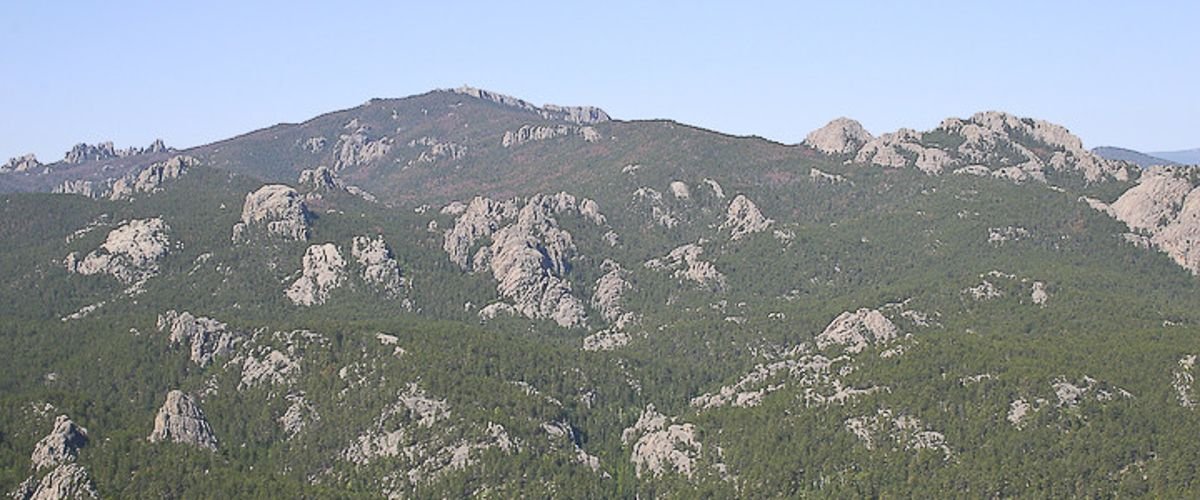
Beth Steinhauer, Black Hills National Forest · Public domain · Wikimedia Commons
Investigated reportLogged and followed up by an investigating group.On the recordIn a newspaper, police, government or court record, or from a named public witness.Told storyFolklore, oral tradition or a story passed along.Proven hoaxProven or confessed hoax.
Can you visit?LabelType
1Taku-He of Little Eagle On the record
Ape-like · Little Eagle, Standing Rock Reservation, Corson County · first reported 1977 · also called Taku He
In 1977 the community of Little Eagle on the Standing Rock Reservation went through what a Sitting Bull College history post calls the Bigfoot excitement. Around 28 sightings were reported of tall, hairy figures, with some witnesses describing green eyes, and tracks were found in cattle pastures. Community members and tribal police officers were among those who reported encounters, and the Dakota Sun newspaper covered the events. Researcher Mark Hall wrote them up in 1978 in the Minnesota Archaeologist, and historian Tom Isern later visited Little Eagle and wrote about it. Locally the being is known as Taku He. Corson County still leads South Dakota in BFRO reports.
1977On the record About 28 sightings were reported around Little Eagle, documented in the November 1977 issue of the Dakota Sun, published by Standing Rock College. Source: sittingbullcollege.wixsite.com
1977On the record Witnesses named in later summaries include community members and tribal police officers, who reported tall hairy figures and large tracks in pastures. Source: folkbestiary.com
Visiting: Sitting Bull College Library in Fort Yates holds copies of the Dakota Sun.
Water monster · Lake Kampeska, Watertown, Codington County · first reported 1886
In 1886, boat builders on Lake Kampeska near Watertown reported a snake-like animal about 20 feet long. People laughed at first, but the story gained weight when four Watertown businessmen said they also watched it swim a good distance before going under. Even the witnesses suggested it might have been an unusually big lake sturgeon rather than something unknown. South Dakota Magazine includes it in a round-up of the state's water stories. Lake Kampeska is now a popular recreation lake for Watertown, and the serpent is a quiet footnote in local history.
1886Told story Boat builders and then four Watertown businessmen reported a 20-foot snake-like creature swimming in the lake. The witnesses themselves floated the idea of a giant sturgeon. Source: southdakotamagazine.com
Open to visit
Visiting: Public parks and beaches on Lake Kampeska in Watertown.
Water monster · Missouri River near Yankton · first reported 1992 · also called Missouri River sturgeon
In 1992, a young couple boating on the Missouri River near Yankton saw a small object with a yellow flag being pulled upstream on a rope. The rope fouled their propeller, and their boat was dragged backward through rough water, with the stern nearly going under, for about 300 yards until the husband cut it free. Other anglers saw it happen. Locals guessed a huge sturgeon had taken a set line, with some speculating it weighed as much as 1,000 pounds. Dam builders on the river had earlier reported seeing very large fish near the bottom. It is a fish story, but a vivid one.
1992Told story A couple's boat was towed backward about 300 yards by an unseen animal tangled in a flagged line before they cut it loose. Other fishermen witnessed the event. Source: southdakotamagazine.com
Open to visit
Visiting: Riverside Park and the Meridian Bridge in Yankton overlook the Missouri.
Humanoid · Spirit Mound Historic Prairie, north of Vermillion, Clay County · first reported recorded August 1804 · also called Little Tree Dwellers
Spirit Mound is a lone hill on the prairie north of Vermillion. In August 1804, Lewis and Clark walked there after hearing from local nations, including Sioux, Omaha and Otoe people, that it was home to small beings about 18 inches tall with large heads who shot arrows at intruders. The explorers found no little people, only huge herds of bison and flocks of birds. Clark guessed the steady wind drove insects to the sheltered side of the mound, drawing birds and perhaps feeding the legend. Today it is a restored prairie park and one of the few places where visitors can stand exactly where the expedition stood.
August 1804On the record Lewis and Clark hiked to the mound in intense heat, recorded the local belief in small arrow-shooting beings, and found abundant wildlife instead. Source: nps.gov
Open to visit
Visiting: Spirit Mound Historic Prairie, open to the public with a trail to the summit.
5Cheyenne Canyon Little People Petroglyphs Told story
Humanoid · Cheyenne Canyon, about 12 miles south of Hot Springs, Fall River County · first reported ancient petroglyphs · also called Wiwila
In a canyon south of Hot Springs in the southern Black Hills, ancient rock carvings show five small faces with topknots. Some interpreters connect them to Lakota traditions of little people and to wiwila, spirits associated with springs, water and rain. The carvings are undated and their meaning is debated. They are a reminder that the Black Hills, sacred to the Lakota and other nations, hold layers of belief far older than modern monster lore. Anyone interested should approach the site and the traditions with respect and follow guidance from tribal and land managers.
Winged · Black Hills and western South Dakota · first reported Lakota tradition · also called Thunderbird
In Lakota tradition, the Wakinyan, or Thunder Beings, are powerful sky beings tied to storms, lightning, rain and renewal, and they are often pictured in thunderbird form. They are sacred, not cryptids, and their return with spring storms is meaningful in Lakota life. Many Lakota people prefer that the deeper teachings be shared by their own communities. This entry is included because outside writers often lump thunderbird sightings and Lakota belief together. Readers interested in big-bird reports should see the cryptid-sighting entries in other states, and treat the Wakinyan as part of a living religion.
Ape-like · Corson County and the Black Hills · first reported 1977
The BFRO lists about 20 South Dakota reports, led by Corson County and Black Hills counties, including a close-range sighting near Sturgis in 2025. See the Taku-He entry and the main Bigfoot dossier.