Overview
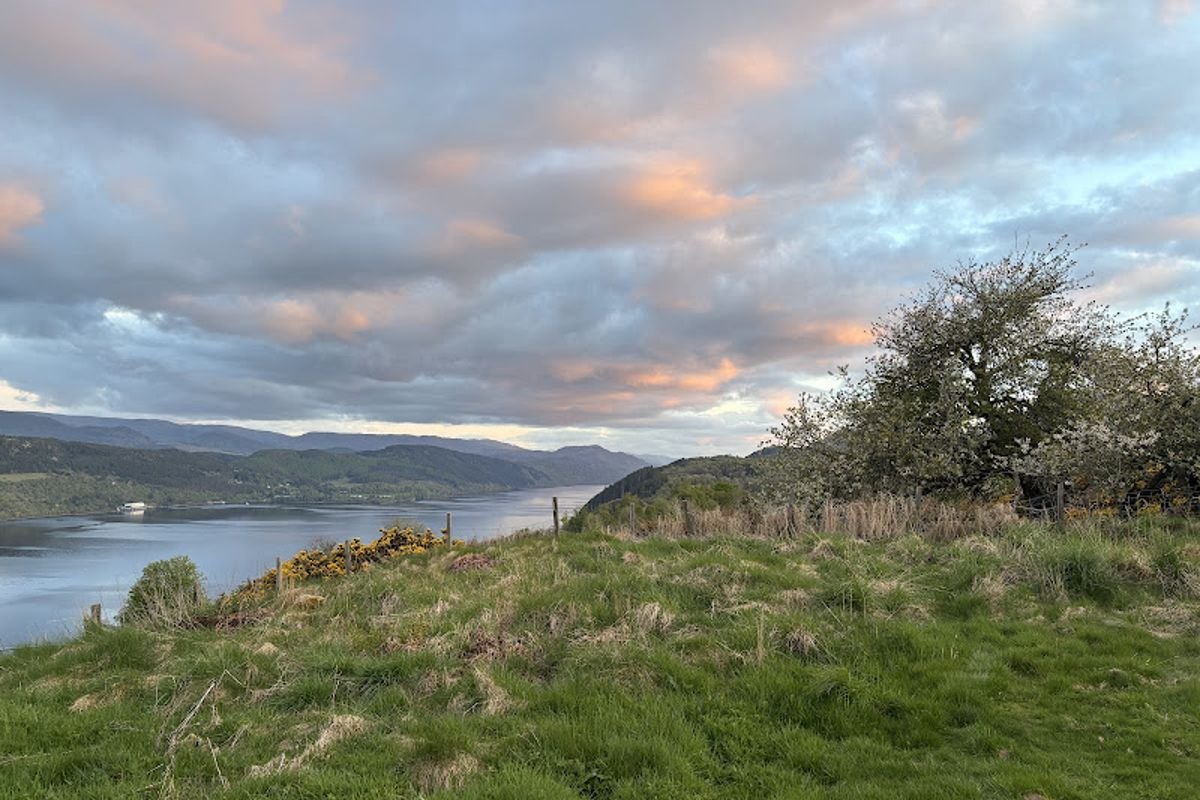
Loch Ness runs about 22.5 miles (36 km) southwest from near Inverness through the Scottish Highlands. It is up to about 754 feet deep and holds roughly 7.5 cubic kilometers of water, more than all the lakes of England and Wales together. Only Loch Morar is deeper in Scotland. The loch forms a large part of the Caledonian Canal route, which links the east and west coasts of Scotland.
Stories of a beast here are old. A seventh-century life of St Columba, written by Adomnán, tells of a 'water beast' in the River Ness around 565 AD, and Highland folklore is full of kelpies, or water horses. Skeptics see the Columba story as a standard saint's tale rather than a wildlife report.
The modern legend began in spring 1933. The Inverness Courier reported on May 2, 1933, that Aldie Mackay had seen a huge creature rolling in the water. That July, George Spicer said he saw a long-necked animal cross the road in front of his car. Photos, films, sonar hunts and DNA surveys followed for the next ninety years, and several of the most famous pieces of evidence turned out to be hoaxes.
Today Nessie is a major tourist draw. Visitors base themselves in Drumnadrochit, home of the Loch Ness Centre and Exhibition, which covers both the loch's natural history and the legend, and at the ruins of Urquhart Castle on the western shore, the backdrop of several famous photos.
Visiting
Where: Scottish Highlands, about 10 km southwest of Inverness. Drumnadrochit on the west shore has the Loch Ness Centre; Urquhart Castle is 2 km east of the village; Fort Augustus is at the southern end on the Caledonian Canal.
Access: The shores, villages and roads around the loch are public. Urquhart Castle is a ticketed historic site. The water is very cold and deep all year; stay well back from steep banks and do not swim far out.
Events: The Loch Ness Centre has joined volunteer group Loch Ness Exploration in large organized 'Quest' searches, including a 90th-anniversary hunt in August 2023.
Timeline
- c. 565 ADAdomnán's life of St Columba describes a water beast in the River Ness.
- Apr 15, 1933Aldie Mackay reports a whale-like creature rolling in the loch.
- May 2, 1933The Inverness Courier publishes the report; the modern legend begins.
- Jul 22, 1933George and Mrs Spicer report a long-necked animal crossing the road.
- Nov 1933Hugh Gray takes the first claimed photo.
- Jan 5, 1934Vet student Arthur Grant nearly hits a creature with his motorcycle at night.
- Apr 1934The 'Surgeon's Photo' is published; it is exposed as a hoax in 1994.
- 1960Tim Dinsdale films a moving hump.
- 1972-1975Robert Rines' expeditions produce sonar contacts and 'flipper' photos.
- 1987Operation Deepscan sweeps the loch with 24 boats.
- 2003A BBC sonar survey finds no large animal.
- 2018-2019Neil Gemmell's environmental DNA study finds abundant eel DNA, no reptile DNA.
- Aug 2023Volunteers and the Loch Ness Centre stage the largest organized search in decades, with no conclusive sightings.
Reported sightings
River Ness
c. 565 AD Told story
Adomnán's seventh-century life of St Columba tells how the saint drove off a 'water beast' that threatened a man swimming in the River Ness. It is the oldest written story linked to the monster. Historians and skeptics read it as a religious miracle story, not a natural history record.
Source: en.wikipedia.orgNorth shore road near Abriachan
Apr 15, 1933 On the record
Aldie Mackay, driving with her husband, said she saw an enormous creature with a body like a whale rolling in the water. Water bailiff Alex Campbell wrote it up for the Inverness Courier, which published it on May 2. In the late 1980s she said she had already known local 'beast' stories before her sighting.
Source: en.wikipedia.orgRoad between Dores and Foyers
Jul 22, 1933 On the record
George Spicer and his wife said a strange animal crossed the road in front of their car, with a large body about four feet high and 25 feet long and a long, narrow, wavy neck. This was the first report of the now-classic long neck. Researchers have suggested the account may have been shaped by the film King Kong, then showing in London.
Source: en.wikipedia.orgNorth shore road near Abriachan
Jan 5, 1934 On the record
Veterinary student Arthur Grant, riding his motorcycle at about 1 a.m., said he nearly hit a creature that crossed the road and plunged into the loch. He called it a cross between a seal and a plesiosaur. Zoologist Maurice Burton later said Grant's sketch matched an otter.
Source: en.wikipedia.orgLoch Ness
April 1934 Proven hoax
The 'Surgeon's Photo', credited to London doctor Robert Kenneth Wilson, showed a slender neck and head above the water. In 1994 it was confirmed as a hoax: a toy submarine fitted with a wood-putty head, made by a group linked to Marmaduke Wetherell, who wanted revenge on the Daily Mail.
Source: en.wikipedia.orgUrquhart Castle
1955 On the record
Peter MacNab photographed what appear to be two long black humps in the water below Urquhart Castle. Like many Loch Ness photos, it has been argued over ever since, with skeptics suggesting boat wakes.
Source: en.wikipedia.orgNear Foyers
1960 On the record
Tim Dinsdale filmed a hump moving across the loch, one of the best-known films in Nessie history. Later analysis suggested it was most likely a boat seen in poor light.
Source: en.wikipedia.orgUrquhart Bay
1972 Investigated report
Robert Rines' team recorded a moving sonar target, estimated from echo strength at 20 to 30 feet long, and underwater photos that seemed to show a diamond-shaped flipper. Skeptics noted the photos had been enhanced and retouched and suggested debris on the bottom.
Source: en.wikipedia.orgEvidence
Surgeon's Photo (1934) Proven hoax
Toy submarine with a putty head; confirmed hoax in 1994.
Rines flipper photos (1972-75) Disputed
Enhanced underwater images; originals retouched.
Operation Deepscan (1987) Disputed
Sonar contacts later attributed largely to debris, though one sonar expert said something larger than a fish was detected.
eDNA survey (2018-19) Explained
Lots of eel DNA, no reptile DNA.
What each side says
What witnesses and researchers report
Believers point to ninety years of reports from local people and visitors, many with nothing to gain. They note that sonar sweeps in 1972 and 1987 picked up moving targets that were never fully explained; after Operation Deepscan, sonar expert Darrell Lowrance said something larger than a fish had been detected.
Researchers also note how hard the loch is to search: it is long, very deep and vast in volume, so a few animals could in theory evade even large surveys.
What skeptics and scientists suggest
Scientists point to repeated surveys that found nothing: the 2003 BBC sonar search with 600 beams found no large animal, and Neil Gemmell's environmental DNA study found plenty of eel DNA but no sign of reptiles. Gemmell said there is probably not a giant scaly reptile in the loch.
Most sightings, skeptics say, are boat wakes, wind ripples, seiches (slow standing waves in the loch), floating logs, birds, otters, seals or eels, seen on open water where size and distance are hard to judge. Famous evidence like the Surgeon's Photo was hoaxed.
Open questions
- What made the large sonar contacts of 1972 and 1987?
- How big can the eels in Loch Ness grow?
Did you know?
- Loch Ness is the second deepest loch in Scotland after Loch Morar.
- The famous 1934 'Surgeon's Photo' was made with a toy submarine and a wood-putty head.