Overview
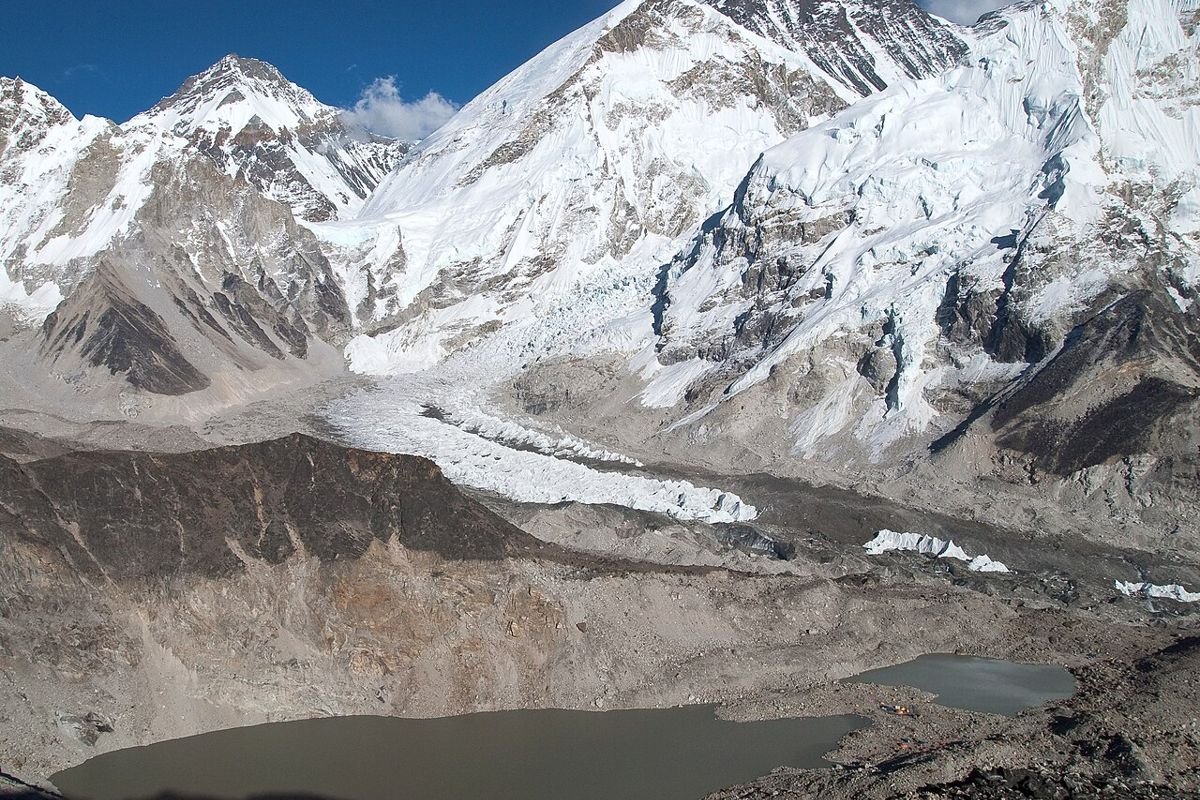
The Khumbu is the Sherpa homeland on the Nepal side of Mount Everest, inside Sagarmatha National Park, a World Heritage Site. Villages such as Khumjung, at about 3,790 meters, and Pangboche, at about 3,985 meters, sit on the trekking route to Everest Base Camp. For many Western readers, this is the heartland of the yeti.
Sherpa and Tibetan tradition knows several wild beings of the mountains. Names recorded by outsiders include meh-teh, the 'wild man of the snows', and dzu-teh, a 'cattle bear' linked to the Himalayan brown bear. Folklorists see the yeti as a blend of these traditions and real animals such as bears.
Western interest began with Everest expeditions. In 1921 Charles Howard-Bury's party found footprints on the Lhagpa La, which his Sherpa companions called the tracks of a 'metoh-kangmi'. Writing in The Statesman, columnist Henry Newman mistranslated the term, and 'Abominable Snowman' was born. In 1951, Eric Shipton photographed large prints in the snow at about 6,000 meters, among the most famous yeti images ever taken.
Expeditions followed, chasing relics as much as tracks. The Khumjung and Pangboche monasteries were known for a purported yeti scalp, and Pangboche for a mummified 'yeti hand', later stolen. Scientific tests over the decades pointed to hoofed animals and bears. The valleys remain a living Sherpa homeland first and a yeti destination second.
Visiting
Where: Khumbu region, Solukhumbu District, Nepal, inside Sagarmatha National Park. Khumjung and Pangboche are on or near the trekking route to Everest Base Camp.
Access: Reached on foot only, after several days of trekking at high altitude, which is a serious health risk: ascend slowly and know the signs of altitude sickness. Check current national park and trekking permit rules before you go. Monasteries are active places of worship; ask before entering and before photographing relics, and follow the monks' guidance.
Events: No yeti festival. The monastery relics, the purported scalp at Khumjung and Pangboche's history with its stolen 'hand', are the main yeti attractions.
Timeline
- 1921Howard-Bury's Everest reconnaissance finds tracks on the Lhagpa La; the 'Abominable Snowman' name follows.
- 1925Photographer N. A. Tombazi reports a figure near the Zemu Glacier in Sikkim.
- 1951Eric Shipton photographs large footprints in the snow.
- 1953Edmund Hillary and Tenzing Norgay report large footprints during their Everest climb.
- 1954The Daily Mail Snowman Expedition samples hair from the Pangboche 'scalp'.
- 1960Hillary's expedition borrows the Khumjung scalp for testing.
- 1961Hillary's Himalayan Trust opens a school in Khumjung.
- 1986Reinhold Messner later concludes the yeti is a Himalayan brown or Tibetan blue bear.
- 2013-2017DNA studies of 'yeti' samples identify bears and a dog.
- 2019Indian Army mountaineers publicize footprints near Makalu base camp.
Reported sightings
Lhagpa La, Everest region (Tibet side)
1921 On the record
Lieutenant-Colonel Charles Howard-Bury's Everest reconnaissance found footprints in the snow on the Lhagpa La. His Sherpa companions said they belonged to a 'metoh-kangmi'. When the story reached a Calcutta newspaper, a columnist rendered it as 'Abominable Snowman', a name that stuck.
Source: en.wikipedia.orgNear the Zemu Glacier, Sikkim (outside the Khumbu)
1925 On the record
Photographer N. A. Tombazi reported seeing an upright, two-legged figure near the Zemu Glacier at about 15,000 feet. He later found footprints similar in shape to a man's but only 6 to 7 inches long.
Source: en.wikipedia.orgEverest region, about 6,000 m
1951 On the record
While on an Everest expedition, mountaineer Eric Shipton photographed a number of large footprints in the snow at about 6,000 meters, one showing two large toes and three smaller ones close together. The photos set off intense scientific debate over what made them and whether they were genuine.
Source: en.wikipedia.orgMount Everest
1953 On the record
During their first ascent expedition, Edmund Hillary and Tenzing Norgay reported large footprints. Hillary later came to discount yeti reports as unreliable.
Source: en.wikipedia.orgPangboche monastery
1954 Investigated report
The Daily Mail Snowman Expedition took hair samples from the monastery's purported yeti scalp. Professor Frederic Wood Jones concluded the hairs came not from a bear or ape but from the shoulder of a coarse-haired hoofed animal.
Source: en.wikipedia.orgKhumjung monastery
1960 Investigated report
Edmund Hillary's expedition borrowed the Khumjung scalp for scientific study. Marca Burns found the hair resembled that of the serow, a Himalayan goat-antelope, though not identical.
Source: en.wikipedia.orgNear Makalu base camp, east of Everest
2019 On the record
Indian Army mountaineers publicized photos of large footprints, about 81 by 38 cm, near Makalu base camp and suggested a yeti. Researchers attributed the tracks to a bear.
Source: en.wikipedia.orgEvidence
Shipton footprint photos (1951) Disputed
Famous images of large prints at about 6,000 m.
Pangboche and Khumjung scalps Explained
Hair tests pointed to a hoofed animal and to serow.
DNA studies (2013, 2017) Explained
Bryan Sykes's samples were later identified as bears; Charlotte Lindqvist's study found Himalayan brown bears, Tibetan blue bears, Asiatic black bears and a dog.
What each side says
What witnesses and researchers report
Believers note that respected mountaineers, not just villagers, reported tracks, and that Sherpa tradition describes the yeti as a distinct being, not simply a bear.
Supporters argue that the high Himalaya is vast, thinly populated and rarely searched in winter, leaving room for a rare animal to go unrecorded.
What skeptics and scientists suggest
Every physical relic tested so far has turned out to be a known animal: hoofed animals and serow for the scalps, and bears and a dog in modern DNA studies. Reinhold Messner, after years in the region, concluded the yeti is a bear that can walk upright or on all fours.
Skeptics argue that footprints in snow can change shape and size as they melt and refreeze, so ordinary tracks may look huge or human. Folklorists describe the yeti as a blend of Sherpa belief and misidentified bears and yaks.
Open questions
- What made the tracks in Shipton's 1951 photographs?
- Where is the stolen Pangboche hand today?
Did you know?
- 'Abominable Snowman' came from a newspaper columnist's mistranslation of the word 'metoh'.
- Edmund Hillary founded a school in Khumjung in 1961 that now teaches hundreds of students.