Overview
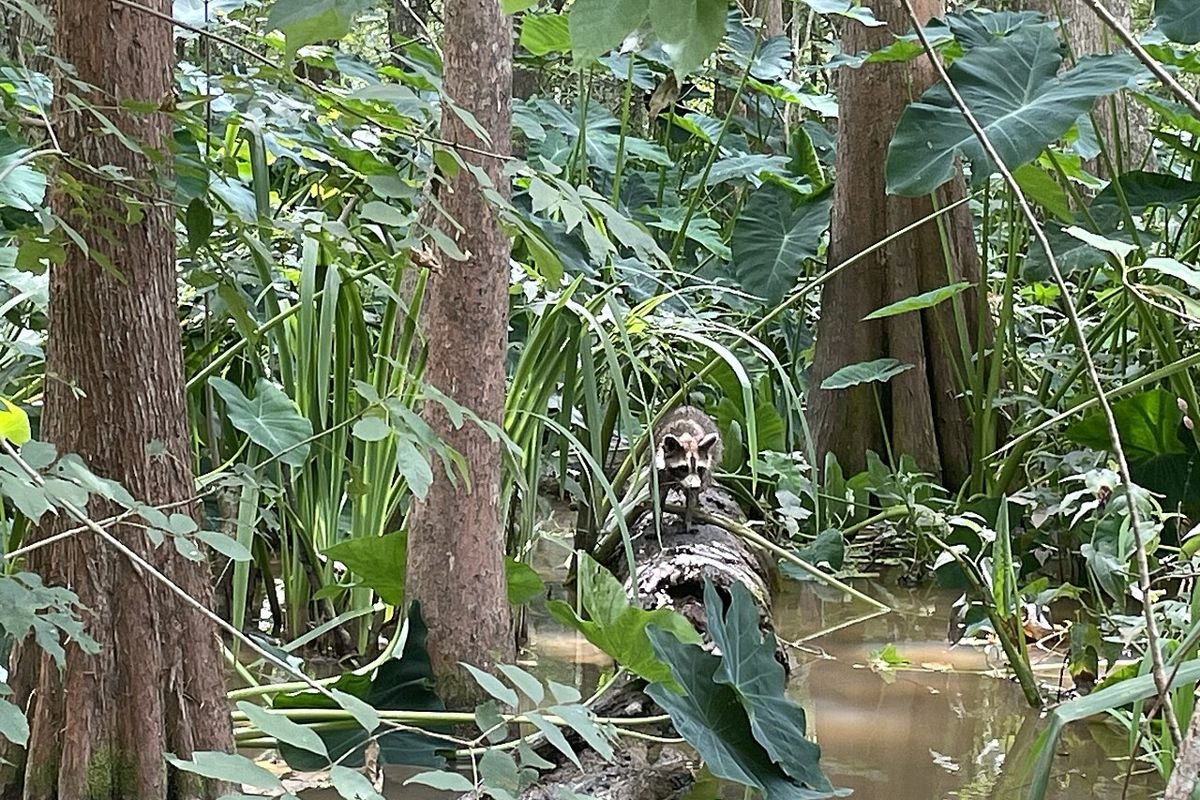
Honey Island Swamp lies in St. Tammany Parish in southeastern Louisiana, between the Pearl River and the West Pearl River, near Slidell and Lake Borgne. It runs more than 20 miles long and nearly seven miles across, about 70,000 acres in all. Roughly half is permanently protected within the Pearl River Wildlife Management Area. It is considered one of the least-altered river swamps in the United States.
The swamp is home to alligators, Louisiana black bears, bobcats, bald eagles and alligator gar, and, local legend says, the Honey Island Swamp Monster. Witnesses describe a bipedal creature about seven feet tall with gray hair, yellow or red eyes and a putrid smell. Plaster casts said to be its tracks show four toes, unlike the five of known primates.
The first claimed sighting came in 1963 from Harlan Ford, a retired air traffic controller who had taken up wildlife photography. In 1974 Ford and his friend Billy Mills said they found strange footprints and a wild boar with its throat torn open. After Ford died in 1980, a reel of Super 8 film said to show the creature turned up among his belongings.
Local lore offers a colorful origin: an early 20th-century train wreck that freed circus chimpanzees, who supposedly adapted to the swamp. The legend was featured in a 2019 episode of the TV series America Unearthed, which suggested the creature's famous stench is methane from rotting plants.
Visiting
Where: St. Tammany Parish, LA, east of Slidell, between the Pearl and West Pearl rivers, bounded by U.S. 11 to the north and Lake Borgne to the south.
Access: Much of the swamp is in the Pearl River Wildlife Management Area, run by the Louisiana Department of Wildlife and Fisheries, so check its rules and hunting seasons before entering. The swamp is roadless and best seen by boat with a guide. Alligators, venomous snakes, deep water and heat are real dangers; do not wade or go in alone.
Events: No festival found.
Timeline
- Early 1900s (legend)A circus train wreck is said to release chimpanzees into the swamp.
- 1963Harlan Ford reports the first claimed sighting.
- 1974Ford and Billy Mills report odd tracks and a boar with a gashed throat.
- 1980Ford dies; a Super 8 film said to show the creature is found among his things.
- Fall 1980 or 1981Two hunters report a dark, muscular creature pulling up a cypress stump (BFRO).
- 2019America Unearthed covers the legend and suggests swamp methane as the source of the smell.
Reported sightings
Honey Island Swamp, St. Tammany Parish
1963 On the record
Harlan Ford, a retired air traffic controller turned wildlife photographer, made the first claimed sighting of the creature. Later descriptions of the monster, as a tall, gray-haired, yellow- or red-eyed biped with a terrible smell, trace back to the stories Ford and others told.
Source: en.wikipedia.orgHoney Island Swamp
1974 On the record
Ford and his friend Billy Mills said they found unusual footprints in the swamp along with the body of a wild boar whose throat had been gashed. Casts attributed to the creature show four toes, which supporters see as a sign of an unknown animal and skeptics as a sign of fakery.
Source: en.wikipedia.orgHarlan Ford's belongings (location of footage unknown)
Found after 1980 On the record
After Ford died in 1980, a reel of Super 8 film said to show the creature was found among his belongings. No independent analysis of the footage was found in the sources reviewed.
Source: en.wikipedia.orgBeside a river in Honey Island Swamp
Fall 1980 or 1981 Investigated report
A man told the BFRO that his stepfather and stepbrother, both experienced in the swamp, saw a dark, very muscular, hairy creature about 75 yards away. It stood six to seven feet tall, had little hair around the nose and mouth, and pulled a cypress stump from the mud and threw it into the river. Large human-like footprints were found. The account is second-hand; BFRO rated it Class B.
Source: bfro.netEvidence
Four-toed track casts Disputed
Casts attributed to the creature show four toes, unlike known primates.
Ford's Super 8 film Disputed
Found after his death in 1980; not independently authenticated.
Swamp smell Explained
A 2019 TV investigation suggested methane from rotting plants explains the reported stench.
What each side says
What witnesses and researchers report
Supporters stress that the first witness was a retired air traffic controller and wildlife photographer, someone trained to observe, and that he backed his story with tracks and later film.
Hunters who know the swamp well have also reported a large, muscular, hairy figure, and their accounts have stayed consistent over years of retelling.
What skeptics and scientists suggest
Ecologist Paul Wagner says he has found no credible evidence beyond anecdotes and possible forgeries. Four-toed tracks, unlike any known ape, raise suspicion of fakes.
Skeptics note that the swamp's well-known smells can come from methane released by rotting vegetation, and that the area's real black bears could explain some sightings.
Open questions
- What does Harlan Ford's Super 8 film actually show?
- Why do the casts show four toes?
Did you know?
- Honey Island Swamp is considered one of the least-altered river swamps in the United States.
- The circus-train origin story says the 'monster' is descended from escaped chimpanzees.