Overview
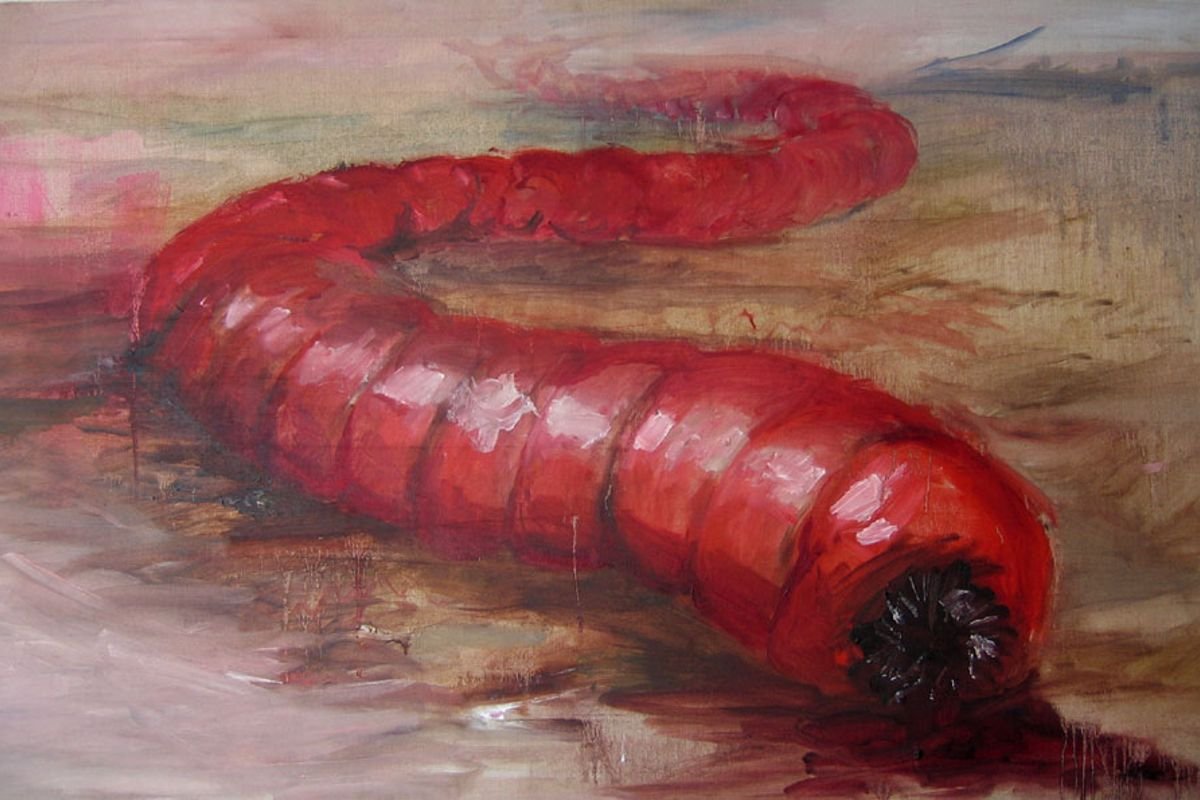
In the Gobi Desert of Mongolia, nomads tell of the olgoi-khorkhoi, a name usually translated as 'large intestine worm'. It is described as a thick, sausage-like creature about two feet long, with no clear head or legs. Stories say it lives under the sand and can kill from a distance, either by spraying venom or with an electric shock. Some say it makes the sand ripple as it moves.
The legend reached the West through the American explorer Roy Chapman Andrews. In 1922 Mongolian officials, including Prime Minister Damdinbazar, described the creature to him, and he wrote about it in his 1926 book On the Trail of Ancient Man. He noted that the officials believed in it firmly but none had seen it.
Later searchers went to the southern Gobi. Czech researcher Ivan Mackerle led trips in the early 1990s and even tried a motorized 'thumper' and small explosions to draw it out, an idea inspired by the novel Dune. British zoologist Richard Freeman searched in 2005, and New Zealand reporter David Farrier in 2009. None found the worm.
Freeman concluded the stories probably describe an undiscovered legless reptile such as a worm lizard. Others point to the Tartar sand boa, which locals identified as matching the description in 1983. The death worm remains a story without a specimen.
Timeline
- 1922Prime Minister Damdinbazar describes the worm to Roy Chapman Andrews.
- 1926Andrews publishes On the Trail of Ancient Man.
- 1950sReported sightings peak, according to interviews by David Farrier.
- 1983Locals identify a Tartar sand boa specimen as an olgoi-khorkhoi.
- 1990-1992Ivan Mackerle searches the Gobi with a thumper and explosives.
- 2005Richard Freeman's Centre for Fortean Zoology expedition.
- 2009David Farrier interviews locals and finds no evidence.
Reported sightings
Ulaanbaatar (interview about the Gobi)
1922 Told story
Mongolian Prime Minister Damdinbazar told Roy Chapman Andrews the worm was shaped like a sausage about two feet long, with no head or legs, and so poisonous that touching it meant death. Andrews recorded that the officials believed in it but had not seen it themselves.
Source: en.wikipedia.orgSouth Gobi, Mongolia
1950s Told story
When David Farrier interviewed Gobi residents in 2009, they told him most sightings dated to the 1950s. The stories were secondhand or old, and he found no physical evidence.
Source: en.wikipedia.orgGobi, Mongolia
1983 On the record
A Tartar sand boa, a small, thick-bodied desert snake, was shown to local people, who said it matched what they called the olgoi-khorkhoi. Skeptics treat this as the most likely source of at least some of the legend.
Source: en.wikipedia.orgSouthern Gobi, Mongolia
1990-1992 Investigated report
Ivan Mackerle led small teams into the desert to collect stories and try to lure the worm out. Borrowing an idea from Dune, they used a motor-driven thumper and small explosions to send vibrations into the sand. Nothing surfaced.
Source: en.wikipedia.orgGobi, Mongolia
2005 Investigated report
Richard Freeman of the Centre for Fortean Zoology led an expedition and interviewed locals. He concluded the reports likely describe an unknown species of worm lizard (amphisbaenian), and that the deadly powers in the stories are apocryphal.
Source: en.wikipedia.orgEvidence
Local testimony Disputed
Long-standing nomad stories, mostly old or secondhand.
Tartar sand boa identification (1983) Explained
Locals said a sand boa specimen matched the creature.
Expedition results Unexplained
Several searches 1990-2009 found no specimen.
What each side says
What witnesses and researchers report
Supporters note that the belief was strong enough among Mongolian officials in 1922 for Andrews to record it in his book. The Gobi is vast and lightly studied, and burrowing animals are hard to find.
Richard Freeman thought a real but undescribed legless reptile could lie behind the stories, even if the venom and electric shocks are exaggerations.
What skeptics and scientists suggest
Skeptics note no specimen, photo or bite victim has ever been documented. The 1983 sand boa identification shows a known animal can fit the description.
Even Richard Freeman, who went looking for it, called the deadly powers apocryphal. Skeptics see the venom and electric shocks as folklore layered onto an ordinary desert animal.
Open questions
- Why did sightings seem to drop off after the 1950s?
- Is there an undescribed burrowing reptile in the Gobi?
Visiting
Where: The southern Gobi Desert, Mongolia.
Access: Reached by tour operators from Ulaanbaatar; remote desert travel with guides.
Events: None.
Did you know?
- Mackerle's thumper idea came straight from Frank Herbert's Dune, with its giant sandworms.